• Geothermal District Heating Market Gains Traction as Sustainable Energy Solutions Expand Globally

    https://researchintelo.com/report/geothermal-district-heating-market

    The global Geothermal District Heating Market
    is witnessing steady growth as countries transition toward low-carbon energy systems. Increasing demand for sustainable heating solutions and rising concerns over greenhouse gas emissions are driving the adoption of geothermal district heating systems worldwide.
    Geothermal District Heating Market Gains Traction as Sustainable Energy Solutions Expand Globally https://researchintelo.com/report/geothermal-district-heating-market The global Geothermal District Heating Market is witnessing steady growth as countries transition toward low-carbon energy systems. Increasing demand for sustainable heating solutions and rising concerns over greenhouse gas emissions are driving the adoption of geothermal district heating systems worldwide.
    Geothermal District-Heating Market Research Report 2033
    researchintelo.com
    According to our latest research, the Global Geothermal District-Heating market size was valued at $4.2 billion in 2024 and is projected to reach $9.8 billion by 2033, expanding at a robust CAGR of 9.8% during the forecast period of 2024–2033.
    0 ·0 Shares · 75 · 0
  • Top Trends Fueling Growth in the Wireline Trucks Industry

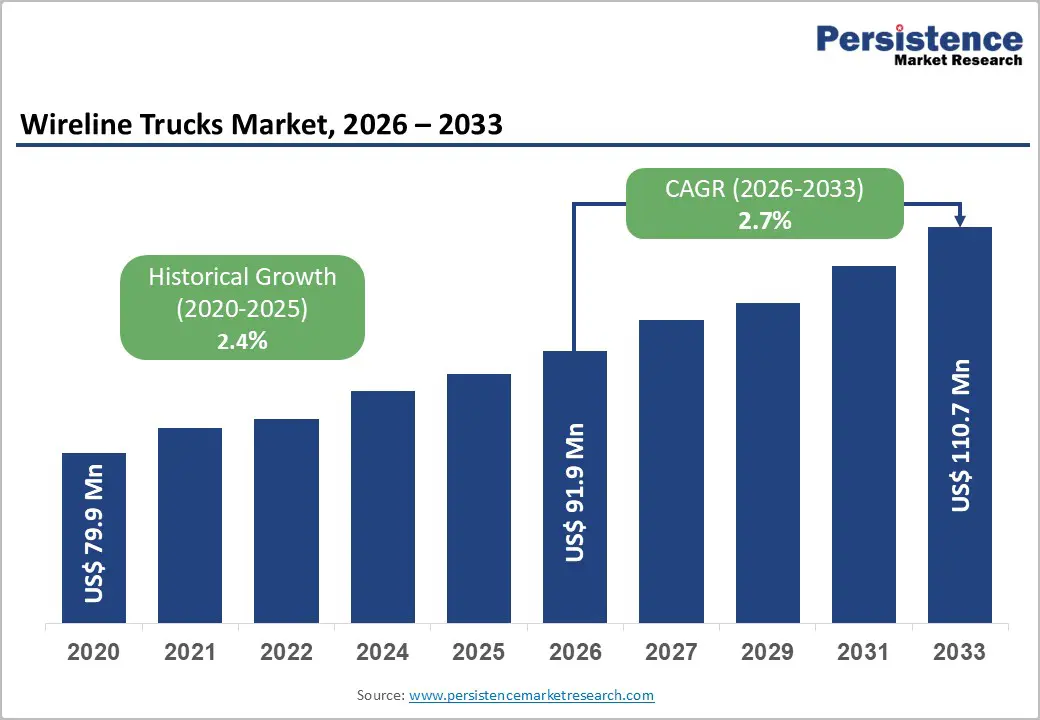
    The global wireline trucks market is projected to witness steady growth, driven by the ongoing need for efficient oilfield services, well intervention operations, and reservoir monitoring across the oil and gas industry. The market is expected to be valued at US$ 91.9 million in 2026 and is projected to reach US$ 110.7 million by 2033, expanding at a compound annual growth rate (CAGR) of 2.7% during the forecast period from 2026 to 2033.

    Wireline trucks are specialized vehicles equipped with cable-based systems used for well logging, completion, and intervention activities in oil and gas exploration and production. These trucks play a crucial role in gathering subsurface data, performing maintenance operations, and enhancing well productivity.

    The growth of the market is supported by increasing investments in upstream oil and gas activities, particularly in mature oilfields where well intervention and maintenance are essential to extend operational life. Additionally, rising energy demand and the need for efficient resource extraction are driving the adoption of advanced wireline technologies. However, market growth remains moderate due to fluctuations in oil prices and the gradual transition toward renewable energy sources.

    https://www.persistencemarketresearch.com/market-research/wireline-trucks-market.asp

    Key Highlights from the Report

    ➤ Market Value: The wireline trucks market is projected to grow from US$ 91.9 million in 2026 to US$ 110.7 million by 2033, at a CAGR of 2.7%.
    ➤ Increasing demand for well intervention and maintenance in mature oilfields.
    ➤ Growing investments in upstream oil and gas exploration activities.
    ➤ Rising need for accurate subsurface data and reservoir analysis.
    ➤ Technological advancements in wireline equipment and digital monitoring.
    ➤ Expansion of offshore and unconventional oil and gas projects.
    Top Trends Fueling Growth in the Wireline Trucks Industry The global wireline trucks market is projected to witness steady growth, driven by the ongoing need for efficient oilfield services, well intervention operations, and reservoir monitoring across the oil and gas industry. The market is expected to be valued at US$ 91.9 million in 2026 and is projected to reach US$ 110.7 million by 2033, expanding at a compound annual growth rate (CAGR) of 2.7% during the forecast period from 2026 to 2033. Wireline trucks are specialized vehicles equipped with cable-based systems used for well logging, completion, and intervention activities in oil and gas exploration and production. These trucks play a crucial role in gathering subsurface data, performing maintenance operations, and enhancing well productivity. The growth of the market is supported by increasing investments in upstream oil and gas activities, particularly in mature oilfields where well intervention and maintenance are essential to extend operational life. Additionally, rising energy demand and the need for efficient resource extraction are driving the adoption of advanced wireline technologies. However, market growth remains moderate due to fluctuations in oil prices and the gradual transition toward renewable energy sources. https://www.persistencemarketresearch.com/market-research/wireline-trucks-market.asp Key Highlights from the Report ➤ Market Value: The wireline trucks market is projected to grow from US$ 91.9 million in 2026 to US$ 110.7 million by 2033, at a CAGR of 2.7%. ➤ Increasing demand for well intervention and maintenance in mature oilfields. ➤ Growing investments in upstream oil and gas exploration activities. ➤ Rising need for accurate subsurface data and reservoir analysis. ➤ Technological advancements in wireline equipment and digital monitoring. ➤ Expansion of offshore and unconventional oil and gas projects.
    Wireline Trucks Market Size, Share, & Growth Report, 2033
    www.persistencemarketresearch.com
    The global wireline trucks market is set to reach US$ 110.7 Mn by 2033, expanding at a 2.7% CAGR during 2026–2033, driven by oilfield activity
    0 ·0 Shares · 80 · 0
  • Global Predictive Analytics Solutions for PCR Resin Quality Market to Reach USD 3.38 Billion by 2036
    The global Predictive Analytics Solutions for PCR Resin Quality Market is entering a decisive growth phase, projected to expand from USD 920.0 million in 2026 to USD 3,380.0 million by 2036, registering a robust CAGR of 13.9%. As recycled plastics gain mainstream adoption across packaging, automotive, and consumer goods industries, predictive analytics is emerging as a mission-critical layer for ensuring consistent resin performance and reducing costly production inefficiencies.
    Driven by increasing variability in post-consumer recycled (PCR) feedstock, the market is witnessing accelerated investments in AI-powered quality prediction tools that allow manufacturers to anticipate defects before they disrupt operations. For decision-makers, the value proposition is clear: improved yield, reduced rejection rates, and stronger compliance with evolving sustainability mandates.
    Data-Driven Quality Control Becomes a Strategic Imperative
    A key growth driver is the rising cost of quality failures in PCR resin processing. Manufacturers are increasingly turning to predictive analytics to mitigate:
    Off-spec pellet production and batch rejections
    Customer chargebacks and compliance risks
    Production downtime and rework costs
    Inconsistent material performance across applications
    By integrating historical production data, real-time sensor inputs, and lab testing results, predictive platforms enable proactive decision-making across blending, extrusion, and shipment release processes.

    Access the Full Market Research Report — Click Here! https://www.futuremarketinsights.com/reports/predictive-analytics-solutions-for-pcr-resin-quality-market

    Analyst Perspective: From Reactive Testing to Predictive Assurance
    Industry analysts note a structural shift in quality management approaches. Traditional post-production testing is increasingly being replaced by predictive assurance models that identify risks earlier in the process.
    “Predictive analytics is no longer a ‘nice-to-have’ but a foundational capability for scaling PCR adoption,” notes a senior market analyst. “As data ecosystems mature and integration challenges are addressed, companies that invest early will gain a measurable edge in cost efficiency and customer trust.”
    Future Outlook: Unlocking Scalable, Sustainable Growth
    Looking ahead, the market is poised to benefit from:
    Increasing digitization of recycling operations
    Expansion of advanced recycling and compounding facilities
    Rising demand for traceable and high-performance PCR materials
    Integration of digital twins and smart manufacturing systems

    As sustainability goals tighten and supply chains become more complex, predictive analytics solutions will play a central role in enabling consistent, high-quality recycled materials at scale.
    For stakeholders across the plastics value chain, the message is clear: data-driven quality management is the gateway to unlocking the full potential of circular plastics economies.


    Global Predictive Analytics Solutions for PCR Resin Quality Market to Reach USD 3.38 Billion by 2036 The global Predictive Analytics Solutions for PCR Resin Quality Market is entering a decisive growth phase, projected to expand from USD 920.0 million in 2026 to USD 3,380.0 million by 2036, registering a robust CAGR of 13.9%. As recycled plastics gain mainstream adoption across packaging, automotive, and consumer goods industries, predictive analytics is emerging as a mission-critical layer for ensuring consistent resin performance and reducing costly production inefficiencies. Driven by increasing variability in post-consumer recycled (PCR) feedstock, the market is witnessing accelerated investments in AI-powered quality prediction tools that allow manufacturers to anticipate defects before they disrupt operations. For decision-makers, the value proposition is clear: improved yield, reduced rejection rates, and stronger compliance with evolving sustainability mandates. Data-Driven Quality Control Becomes a Strategic Imperative A key growth driver is the rising cost of quality failures in PCR resin processing. Manufacturers are increasingly turning to predictive analytics to mitigate: Off-spec pellet production and batch rejections Customer chargebacks and compliance risks Production downtime and rework costs Inconsistent material performance across applications By integrating historical production data, real-time sensor inputs, and lab testing results, predictive platforms enable proactive decision-making across blending, extrusion, and shipment release processes. Access the Full Market Research Report — Click Here! https://www.futuremarketinsights.com/reports/predictive-analytics-solutions-for-pcr-resin-quality-market Analyst Perspective: From Reactive Testing to Predictive Assurance Industry analysts note a structural shift in quality management approaches. Traditional post-production testing is increasingly being replaced by predictive assurance models that identify risks earlier in the process. “Predictive analytics is no longer a ‘nice-to-have’ but a foundational capability for scaling PCR adoption,” notes a senior market analyst. “As data ecosystems mature and integration challenges are addressed, companies that invest early will gain a measurable edge in cost efficiency and customer trust.” Future Outlook: Unlocking Scalable, Sustainable Growth Looking ahead, the market is poised to benefit from: Increasing digitization of recycling operations Expansion of advanced recycling and compounding facilities Rising demand for traceable and high-performance PCR materials Integration of digital twins and smart manufacturing systems As sustainability goals tighten and supply chains become more complex, predictive analytics solutions will play a central role in enabling consistent, high-quality recycled materials at scale. For stakeholders across the plastics value chain, the message is clear: data-driven quality management is the gateway to unlocking the full potential of circular plastics economies.
    0 ·0 Shares · 89 · 0
  • Top Growth Opportunities in the Industrial Vehicle Market Through 2033

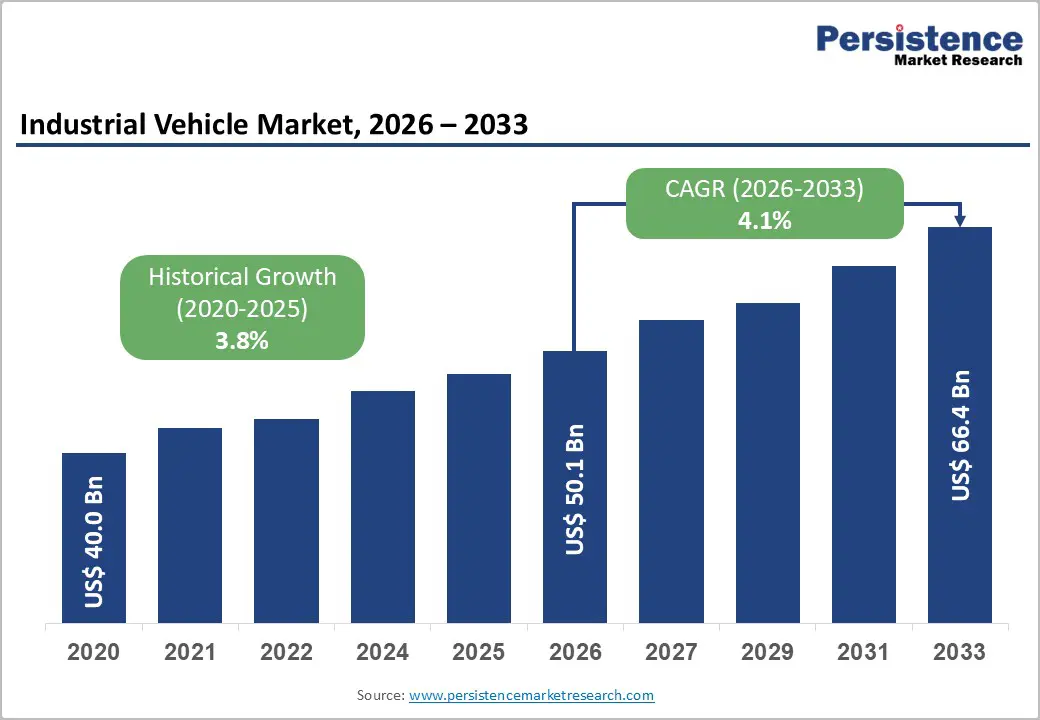
    The global industrial vehicle market is poised for consistent expansion, supported by the growing demand for efficient material handling, logistics optimization, and industrial automation across key sectors. According to recent insights from leading market research firms, the market is projected to grow from US$ 50.1 billion in 2026 to approximately US$ 66.4 billion by 2033, registering a compound annual growth rate (CAGR) of 4.1% during the forecast period of 2026–2033.

    Industrial vehicles, including forklifts, automated guided vehicles (AGVs), tow tractors, and container handlers, play a critical role in manufacturing, warehousing, ports, and construction activities. The steady growth of e-commerce, expansion of global supply chains, and increasing investments in infrastructure development are major factors driving demand for these vehicles.

    Moreover, the shift toward automation and smart manufacturing is significantly influencing the market landscape. Industries are increasingly adopting advanced industrial vehicles equipped with intelligent systems to enhance productivity, reduce operational costs, and improve workplace safety. The integration of digital technologies is also enabling real-time tracking, predictive maintenance, and efficient fleet management, further boosting market growth.

    Read More: https://www.persistencemarketresearch.com/market-research/industrial-vehicle-market.asp

    Key Highlights from the Report

    ➤ The industrial vehicle market is projected to grow from US$ 50.1 billion in 2026 to US$ 66.4 billion by 2033, at a CAGR of 4.1%.
    ➤ Rapid growth in e-commerce and warehousing is significantly increasing demand for material handling equipment.
    ➤ Automation trends are driving the adoption of AGVs and autonomous industrial vehicles.
    ➤ Rising infrastructure development activities are boosting demand for heavy-duty industrial vehicles.
    ➤ Asia-Pacific dominates the market due to strong manufacturing and logistics sectors.
    ➤ Electrification of industrial vehicles is gaining traction as companies focus on sustainability.
    Top Growth Opportunities in the Industrial Vehicle Market Through 2033 The global industrial vehicle market is poised for consistent expansion, supported by the growing demand for efficient material handling, logistics optimization, and industrial automation across key sectors. According to recent insights from leading market research firms, the market is projected to grow from US$ 50.1 billion in 2026 to approximately US$ 66.4 billion by 2033, registering a compound annual growth rate (CAGR) of 4.1% during the forecast period of 2026–2033. Industrial vehicles, including forklifts, automated guided vehicles (AGVs), tow tractors, and container handlers, play a critical role in manufacturing, warehousing, ports, and construction activities. The steady growth of e-commerce, expansion of global supply chains, and increasing investments in infrastructure development are major factors driving demand for these vehicles. Moreover, the shift toward automation and smart manufacturing is significantly influencing the market landscape. Industries are increasingly adopting advanced industrial vehicles equipped with intelligent systems to enhance productivity, reduce operational costs, and improve workplace safety. The integration of digital technologies is also enabling real-time tracking, predictive maintenance, and efficient fleet management, further boosting market growth. Read More: https://www.persistencemarketresearch.com/market-research/industrial-vehicle-market.asp Key Highlights from the Report ➤ The industrial vehicle market is projected to grow from US$ 50.1 billion in 2026 to US$ 66.4 billion by 2033, at a CAGR of 4.1%. ➤ Rapid growth in e-commerce and warehousing is significantly increasing demand for material handling equipment. ➤ Automation trends are driving the adoption of AGVs and autonomous industrial vehicles. ➤ Rising infrastructure development activities are boosting demand for heavy-duty industrial vehicles. ➤ Asia-Pacific dominates the market due to strong manufacturing and logistics sectors. ➤ Electrification of industrial vehicles is gaining traction as companies focus on sustainability.
    Industrial Vehicle Market Size, Share & Future Scope, 2033
    www.persistencemarketresearch.com
    The global industrial vehicle market is projected to reach US$ 66.4 Billion by 2033, growing at a 4.1% CAGR during 2026–2033
    0 ·0 Shares · 109 · 0
  • Global PCR Content Adoption in Wearable and Smart Devices Market to Reach USD 2.94 Billion by 2036

    The global PCR content adoption in wearable and smart devices market is entering a decisive growth phase, projected to expand from USD 860.0 million in 2026 to USD 2,940.0 million by 2036, registering a robust CAGR of 13.1%. This growth reflects a structural shift in the consumer electronics industry, where sustainability is no longer optional but embedded into product design, procurement strategies, and brand positioning.
    As wearable devices—ranging from smartwatches to fitness trackers and connected accessories—scale globally, manufacturers are prioritizing post-consumer recycled (PCR) plastics to reduce reliance on virgin materials while maintaining product durability, aesthetics, and user experience.
    Market Growth Driven by Material Innovation and Regulatory Push
    The increasing integration of PCR content into wearable and smart devices is being propelled by a convergence of regulatory mandates, consumer awareness, and OEM sustainability commitments.
    Key growth drivers include:
    Rising regulatory pressure to increase recycled content in electronic products
    OEM-led circularity goals, embedding sustainability into product lifecycles
    Advancements in PCR compounding technologies, improving material consistency
    Growing demand for lightweight, durable, and eco-friendly device components
    Unlike traditional cost-driven markets, value creation in this segment is increasingly tied to material qualification, traceability, and long-term supplier partnerships rather than raw material pricing alone.
    Emerging Trends Reshaping the Competitive Landscape
    The market is witnessing a fundamental transformation in how recycled materials are perceived and deployed:
    Design-led PCR integration: Brands are incorporating recycled content at the product design stage rather than as an afterthought
    Focus on visible components: Device housings and bezels account for nearly 48% of PCR adoption, driven by high material usage and manufacturability
    Smartwatches & fitness trackers dominance: Representing 45% of end-use share, these devices offer scalable opportunities due to high production volumes
    Traceability and certification systems: Increasing adoption of digital tracking tools to validate PCR content claims
    Material performance parity: PCR polymers are now engineered to match virgin plastics in aesthetics, strength, and durability
    Regional Insights: Asia Pacific Leads, India Emerges as a Strategic Growth Hub
    Geographically, Asia Pacific dominates the market, supported by strong manufacturing ecosystems and export-driven compliance requirements.

    China leads with a CAGR of 14.2%, driven by large-scale electronics manufacturing and integrated recycling infrastructure
    India follows at 12.0% CAGR, emerging as a key growth hub due to expanding domestic wearable production and improving recycling capabilities
    United States (11.4%) benefits from strong consumer demand for sustainable products and retailer-driven ESG mandates
    Germany (10.2%) emphasizes regulatory compliance and material traceability
    South Korea (9.8%) adopts a measured, quality-focused integration approach
    India’s role is particularly noteworthy, as local manufacturers increasingly align with global sustainability standards while optimizing costs through PCR adoption.

    Competitive Landscape: Material Expertise Defines Market Leadership
    Competition in the PCR content adoption ecosystem is intensifying, with both device manufacturers and material suppliers playing critical roles.
    Key players include: Apple Inc., Huawei Technologies Co., Ltd., Kingfa Sci & Tech Co., Ltd., Google LLC, SABIC, Covestro AG, BASF SE, Sony Group Corporation, Teijin Limited

    Device OEMs such as Apple, Google, and Sony are embedding PCR content into product specifications, leveraging sustainability as a brand differentiator
    Material leaders like SABIC, BASF, and Covestro are developing electronics-grade PCR polymers with consistent flow, finish, and durability
    Specialty compounders including Kingfa and Teijin are focusing on application-specific solutions for compact, high-performance device components
    Strategic advantage increasingly lies with companies that can deliver repeatable material quality, verified traceability, and scalable integration.
    Unlock Comprehensive Market Insights — View the Full Report
    https://www.futuremarketinsights.com/reports/pcr-content-adoption-in-wearable-and-smart-devices-market
    Global PCR Content Adoption in Wearable and Smart Devices Market to Reach USD 2.94 Billion by 2036 The global PCR content adoption in wearable and smart devices market is entering a decisive growth phase, projected to expand from USD 860.0 million in 2026 to USD 2,940.0 million by 2036, registering a robust CAGR of 13.1%. This growth reflects a structural shift in the consumer electronics industry, where sustainability is no longer optional but embedded into product design, procurement strategies, and brand positioning. As wearable devices—ranging from smartwatches to fitness trackers and connected accessories—scale globally, manufacturers are prioritizing post-consumer recycled (PCR) plastics to reduce reliance on virgin materials while maintaining product durability, aesthetics, and user experience. Market Growth Driven by Material Innovation and Regulatory Push The increasing integration of PCR content into wearable and smart devices is being propelled by a convergence of regulatory mandates, consumer awareness, and OEM sustainability commitments. Key growth drivers include: Rising regulatory pressure to increase recycled content in electronic products OEM-led circularity goals, embedding sustainability into product lifecycles Advancements in PCR compounding technologies, improving material consistency Growing demand for lightweight, durable, and eco-friendly device components Unlike traditional cost-driven markets, value creation in this segment is increasingly tied to material qualification, traceability, and long-term supplier partnerships rather than raw material pricing alone. Emerging Trends Reshaping the Competitive Landscape The market is witnessing a fundamental transformation in how recycled materials are perceived and deployed: Design-led PCR integration: Brands are incorporating recycled content at the product design stage rather than as an afterthought Focus on visible components: Device housings and bezels account for nearly 48% of PCR adoption, driven by high material usage and manufacturability Smartwatches & fitness trackers dominance: Representing 45% of end-use share, these devices offer scalable opportunities due to high production volumes Traceability and certification systems: Increasing adoption of digital tracking tools to validate PCR content claims Material performance parity: PCR polymers are now engineered to match virgin plastics in aesthetics, strength, and durability Regional Insights: Asia Pacific Leads, India Emerges as a Strategic Growth Hub Geographically, Asia Pacific dominates the market, supported by strong manufacturing ecosystems and export-driven compliance requirements. China leads with a CAGR of 14.2%, driven by large-scale electronics manufacturing and integrated recycling infrastructure India follows at 12.0% CAGR, emerging as a key growth hub due to expanding domestic wearable production and improving recycling capabilities United States (11.4%) benefits from strong consumer demand for sustainable products and retailer-driven ESG mandates Germany (10.2%) emphasizes regulatory compliance and material traceability South Korea (9.8%) adopts a measured, quality-focused integration approach India’s role is particularly noteworthy, as local manufacturers increasingly align with global sustainability standards while optimizing costs through PCR adoption. Competitive Landscape: Material Expertise Defines Market Leadership Competition in the PCR content adoption ecosystem is intensifying, with both device manufacturers and material suppliers playing critical roles. Key players include: Apple Inc., Huawei Technologies Co., Ltd., Kingfa Sci & Tech Co., Ltd., Google LLC, SABIC, Covestro AG, BASF SE, Sony Group Corporation, Teijin Limited Device OEMs such as Apple, Google, and Sony are embedding PCR content into product specifications, leveraging sustainability as a brand differentiator Material leaders like SABIC, BASF, and Covestro are developing electronics-grade PCR polymers with consistent flow, finish, and durability Specialty compounders including Kingfa and Teijin are focusing on application-specific solutions for compact, high-performance device components Strategic advantage increasingly lies with companies that can deliver repeatable material quality, verified traceability, and scalable integration. Unlock Comprehensive Market Insights — View the Full Report https://www.futuremarketinsights.com/reports/pcr-content-adoption-in-wearable-and-smart-devices-market
    0 ·0 Shares · 104 · 0
  • Torque Converter Market Trends: Innovation in Lock-Up Technology Explained

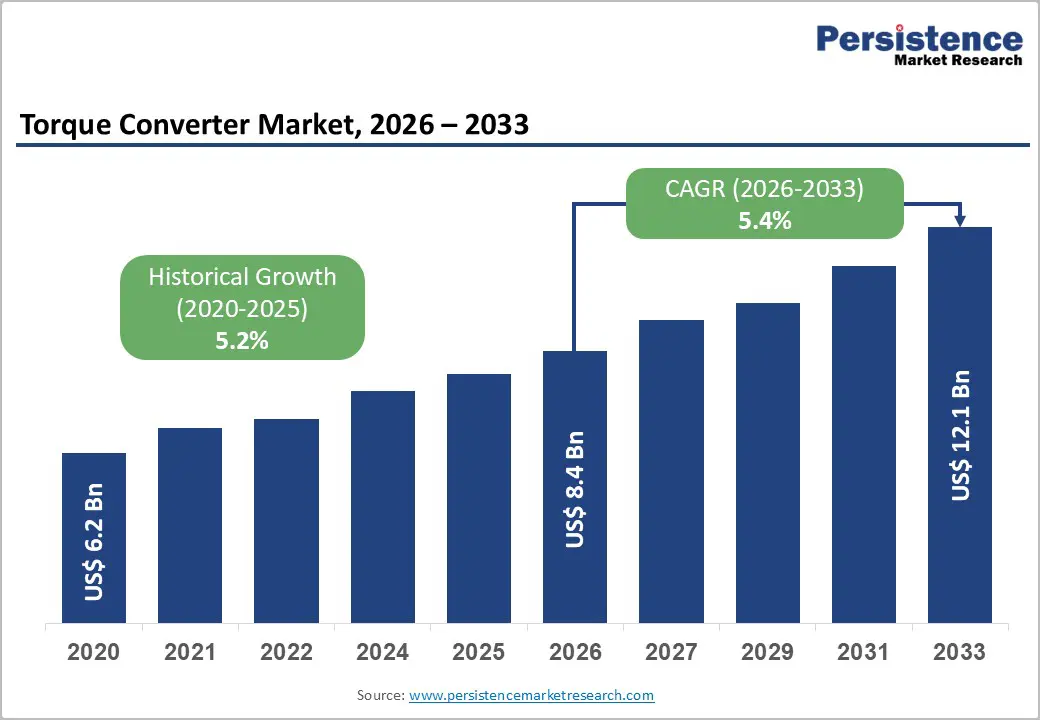
    The global torque converter market is experiencing steady growth, driven by the increasing adoption of automatic transmission systems across passenger and commercial vehicles. According to recent insights from leading market research firms, the market is projected to grow from US$ 8.4 billion in 2026 to approximately US$ 12.1 billion by 2033, registering a compound annual growth rate (CAGR) of 5.4% during the forecast period of 2026–2033.

    Torque converters play a critical role in automatic transmissions by transferring rotating power from the engine to the transmission while allowing for smooth acceleration and improved vehicle drivability. As consumer preferences shift toward comfort, convenience, and fuel-efficient driving experiences, the demand for automatic transmission systems—and consequently torque converters—is increasing globally.

    Key growth drivers include rising vehicle production, increasing penetration of automatic and semi-automatic transmissions, and advancements in transmission technologies. Additionally, the expansion of urban mobility and growing traffic congestion are encouraging consumers to opt for vehicles with smoother driving capabilities, further boosting the demand for torque converters.

    https://www.persistencemarketresearch.com/market-research/torque-converter-market.asp

    Key Highlights from the Report

    ➤ The torque converter market is projected to grow from US$ 8.4 billion in 2026 to US$ 12.1 billion by 2033, at a CAGR of 5.4%.
    ➤ Increasing adoption of automatic transmission systems is a primary driver of market growth.
    ➤ Rising demand for enhanced driving comfort and fuel efficiency is supporting torque converter integration.
    ➤ Growth in commercial vehicle production is contributing significantly to market expansion.
    ➤ Asia-Pacific dominates the market due to high vehicle production and expanding automotive industry.
    ➤ Technological advancements in lock-up torque converters are improving performance and efficiency.
    Torque Converter Market Trends: Innovation in Lock-Up Technology Explained The global torque converter market is experiencing steady growth, driven by the increasing adoption of automatic transmission systems across passenger and commercial vehicles. According to recent insights from leading market research firms, the market is projected to grow from US$ 8.4 billion in 2026 to approximately US$ 12.1 billion by 2033, registering a compound annual growth rate (CAGR) of 5.4% during the forecast period of 2026–2033. Torque converters play a critical role in automatic transmissions by transferring rotating power from the engine to the transmission while allowing for smooth acceleration and improved vehicle drivability. As consumer preferences shift toward comfort, convenience, and fuel-efficient driving experiences, the demand for automatic transmission systems—and consequently torque converters—is increasing globally. Key growth drivers include rising vehicle production, increasing penetration of automatic and semi-automatic transmissions, and advancements in transmission technologies. Additionally, the expansion of urban mobility and growing traffic congestion are encouraging consumers to opt for vehicles with smoother driving capabilities, further boosting the demand for torque converters. https://www.persistencemarketresearch.com/market-research/torque-converter-market.asp Key Highlights from the Report ➤ The torque converter market is projected to grow from US$ 8.4 billion in 2026 to US$ 12.1 billion by 2033, at a CAGR of 5.4%. ➤ Increasing adoption of automatic transmission systems is a primary driver of market growth. ➤ Rising demand for enhanced driving comfort and fuel efficiency is supporting torque converter integration. ➤ Growth in commercial vehicle production is contributing significantly to market expansion. ➤ Asia-Pacific dominates the market due to high vehicle production and expanding automotive industry. ➤ Technological advancements in lock-up torque converters are improving performance and efficiency.
    Torque Converter Market Size & Competitive Analysis, 2033
    www.persistencemarketresearch.com
    The global torque converter market is projected to reach US$ 12.1 Bn by 2033, growing at a 5.4% CAGR during 2026–2033, driven by vehicle demand
    0 ·0 Shares · 210 · 0
  • Quando for rir da Bolívia por ter o Ministério da Marinha sem ter mar, lembre-se que o Brasil tem o Ministério da Cultura.
    Quando for rir da Bolívia por ter o Ministério da Marinha sem ter mar, lembre-se que o Brasil tem o Ministério da Cultura.
    Haha
    Like
    Yay
    9
    · 0 ·0 Shares · 112 · 0
  • | Em reportagem exibida na #GloboNews e também disponível em conteúdos da #Globo, foi explicado que frases usadas para constranger, humilhar ou desqualificar mulheres, como perguntar se uma mulher “está de #TPM” ao reagir com irritação, podem ser enquadradas como manifestação #misógina, a depender do contexto.

    O texto aprovado prevê pena de 1 a 3 anos nos casos de #discriminação ou preconceito e de 2 a 5 anos nos casos de injúria misógina, além de multa. O projeto, relatado por Soraya Thronicke, altera a Lei nº 7.716/1989 para incluir a #misoginia entre os crimes de preconceito e #discriminação.
    🇧🇷 | Em reportagem exibida na #GloboNews e também disponível em conteúdos da #Globo, foi explicado que frases usadas para constranger, humilhar ou desqualificar mulheres, como perguntar se uma mulher “está de #TPM” ao reagir com irritação, podem ser enquadradas como manifestação #misógina, a depender do contexto. O texto aprovado prevê pena de 1 a 3 anos nos casos de #discriminação ou preconceito e de 2 a 5 anos nos casos de injúria misógina, além de multa. O projeto, relatado por Soraya Thronicke, altera a Lei nº 7.716/1989 para incluir a #misoginia entre os crimes de preconceito e #discriminação.
    Angry
    6
    · 0 ·0 Shares · 186 · 46 · 0
  • 0 ·0 Shares · 49 · 0
  • 0 ·0 Shares · 46 · 0
Timelline https://timelline.com