Many women experience hair thinning and shedding after pregnancy, commonly known as postpartum hair loss. This condition occurs due to hormonal changes that shift hair follicles from the growth phase to the shedding phase. While postpartum hair loss is usually temporary, it can be distressing. prp in riyadh offers a safe, non-surgical option to accelerate hair regrowth and restore hair density during this period.
PRP Hair Treatment in Riyadh uses platelet-rich plasma derived from the patient’s own blood to stimulate dormant hair follicles, strengthen existing hairs, and improve scalp health. By providing concentrated growth factors directly to the scalp, PRP supports the natural hair growth cycle and helps restore healthier, thicker hair after pregnancy.
How PRP Works for Postpartum Hair Loss
Postpartum hair loss occurs when estrogen levels drop after childbirth, causing a higher number of hair follicles to enter the shedding (telogen) phase. PRP therapy helps by:
-
Reactivating dormant follicles: Growth factors stimulate follicles to re-enter the active growth (anagen) phase
-
Strengthening existing hair: Follicles produce thicker, stronger hairs that are less prone to breakage
-
Improving scalp health: Enhanced blood flow and nutrient delivery create an optimal environment for hair regrowth
These mechanisms allow PRP to accelerate the recovery of hair density and reduce prolonged shedding.
Targeting Thinning Areas
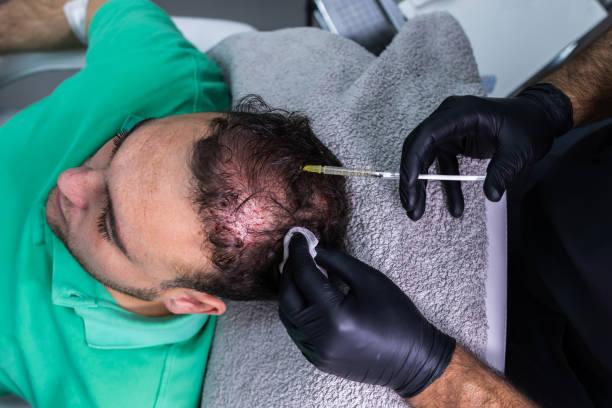
PRP injections are administered to areas of thinning hair, focusing on regions where follicles may be weak or dormant. By delivering growth factors directly to these follicles, PRP encourages new hair growth and improves overall scalp vitality.
Supporting Hair Quality
In addition to increasing hair density, PRP improves the texture, thickness, and strength of new hair. This results in healthier, fuller hair that restores the natural appearance of the scalp.
Benefits for Postpartum Patients
-
Non-surgical and minimally invasive
-
Uses the patient’s own blood, reducing risk of allergic reactions
-
Accelerates recovery from hormone-related hair shedding
-
Supports long-term hair follicle health and density
PRP is particularly useful for women who want to recover hair volume faster than waiting for natural regrowth alone.
Expected Results
-
1–3 Months: Early signs of new hair growth may appear in thinning areas
-
3–6 Months: Noticeable improvement in hair density and scalp coverage
-
6–12 Months: Full results typically achieved with follow-up sessions, including stronger and healthier hair strands
Consistency and proper follow-up sessions enhance long-term outcomes.
Book Your Consultation
For women experiencing postpartum hair loss, Royal Clinic Saudia provides professional PRP Hair Treatment in Riyadh to stimulate follicles, improve hair density, and restore healthier hair. Book an appointment today to begin a personalized hair restoration plan tailored to your postpartum needs.
FAQs:
Can PRP help with hair loss after pregnancy?
Yes, PRP stimulates dormant follicles, strengthens existing hairs, and accelerates regrowth after postpartum shedding.
How soon will new hair appear?
Early improvements may be visible within 1–3 months, with more noticeable results around 3–6 months.
Is PRP safe for postpartum women?
Yes, PRP is minimally invasive and uses the patient’s own blood, making it safe for most postpartum women.
Do I need multiple sessions for optimal results?
Yes, follow-up sessions are recommended to maintain follicle stimulation and achieve long-lasting hair density.


 Arabic
 French
 Spanish
 Portuguese
 Deutsch
 Turkish
 Dutch
Dutch
 Italiano
 Russian
 Romaian
 Brasiliano
 Greek
Greek